



Oversight panel’s report shows troubling trends, need for reforms
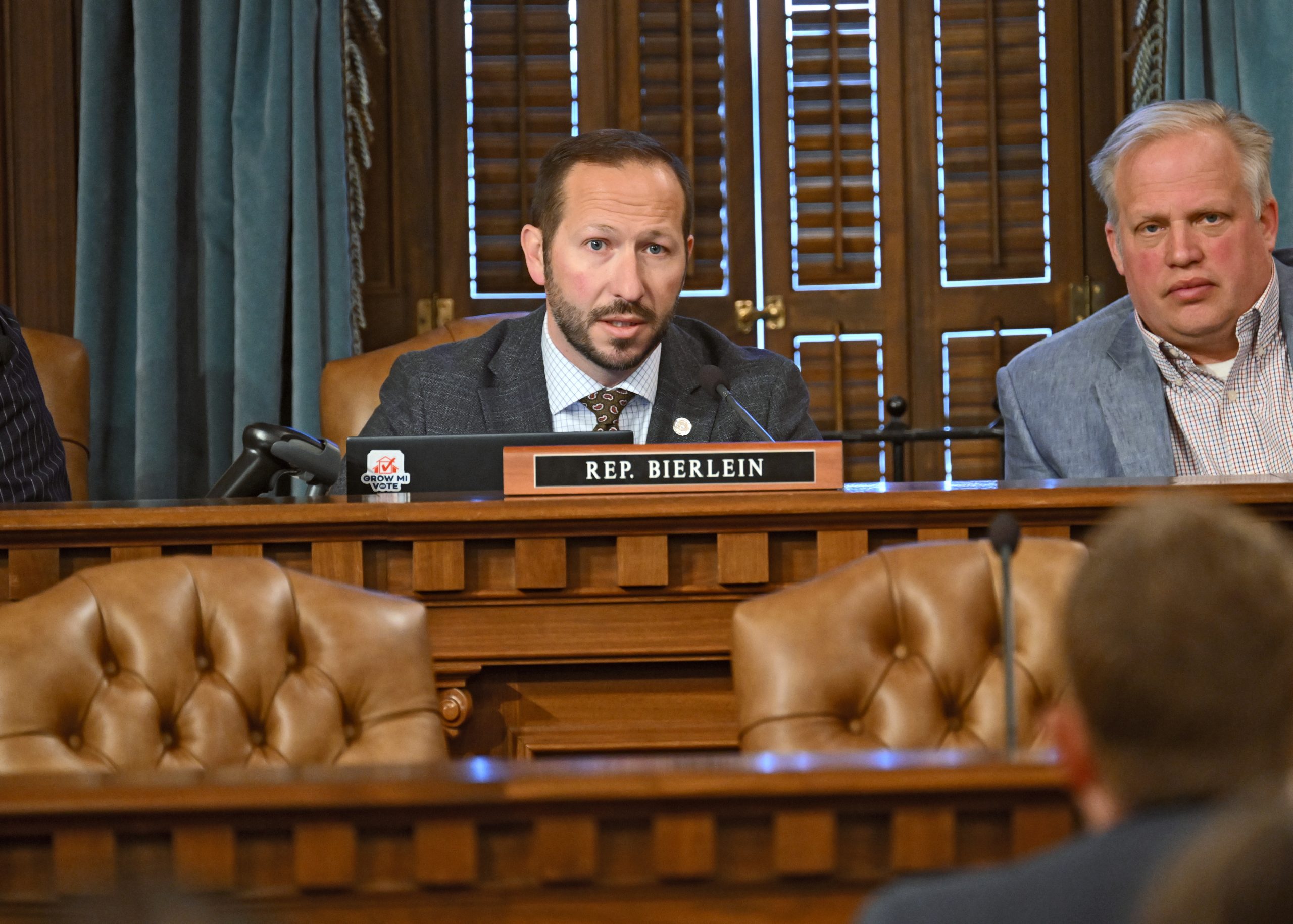
State Rep. Matthew Bierlein today touted a House Oversight subcommittee’s approval of a new report outlining significant state failures in mental health care and recommendations for solutions.
“One in five adults across the United States experiences a mental illness every year and over 1.4 million Michiganders report a mental health condition of some kind. This is something that impacts our families and people throughout our communities,” said Bierlein, of Vassar, who chairs the Oversight Subcommittee on Public Health and Food Security. “The Michigan Constitution deems public health of primary public concern. From there, it’s about how we carry out administering care and delivering an effective system. The state of behavioral health care in Michigan is far past a crisis point. Our investigation and report illuminate ways where the state has fallen short and left providers in a tough spot. Our priority should be delivering better health outcomes for people in need and some of our most vulnerable citizens.”
Last May, the Oversight Subcommittee on Public Health and Food Security launched an investigation into the underperforming behavioral health system in Michigan. Practicing physicians, behavioral health therapists, judges, county jail administrators, hospital executives, local community mental health leaders and others testified in hearings over two months to provide analysis of where the state is falling short and what can be done to get more people critical care they need.
The report that was finalized and submitted in a vote today by the subcommittee looks back to when the state shut down a dozen state psychiatric facilities in 1997 without a sufficient mechanism in place to accommodate people in need. In the years since that move, a lack of flexibility at the state level, as well as staffing and crisis personnel shortages have reached a tipping point and were common themes throughout subcommittee testimony underscoring problems.
Michigan’s system currently ranks 47th in psychiatric bed space availability, averaging 19 psychiatric beds per 100,000 residents while the national average and recommendation is for 30 beds per that amount. The report found that a shortage of beds also does not necessarily mean a bed isn’t physically there, but that a lack of adequate staffing can have the same effect. Without reforms to prioritize staffing and retention, emergency room doctors or correctional officers in jails and prisons have to serve as pseudo psychiatrists, which creates safety issues.
The report also found that rigid bureaucratic requirements and a lack of administrative support make actions like increasing the number of beds in a facility, relocating beds from one site to another, or acquiring and operating a new facility to expand care difficult, which can cause delays and lapses in care capability. Experts who provided testimony also noted the needs of northern Michigan and the Upper Peninsula. In one instance highlighted in the report, an individual had to drive 100 miles at a time to reach a psychiatric facility.
The report makes multiple recommendations, like freeing providers from restrictive policies and allowing experts to treat aggressive or severe behavioral health cases as needed, increasing state funding for staff training to help grow the number of behavioral health professionals in Michigan, creating a dedicated Northern Michigan Behavioral Health Campus to assist an underserved population, and more.
“Our system is overwhelmed and in need of attention,” Bierlein said. “Our jails and courtrooms are now misusing limited resources on mental health patients who need psychiatric treatment, not incarceration. Our streets overflow when these patients fall through the cracks and don’t get care, and we have seen the reasons for that through this report. The time is now to act. Let the experts go to work, support them along the way, and cut the administrative burdens.”


© 2009 - 2026 Michigan House Republicans. All Rights Reserved.
This site is protected by reCAPTCHA and the Google Privacy Policy and Terms of Service apply.